
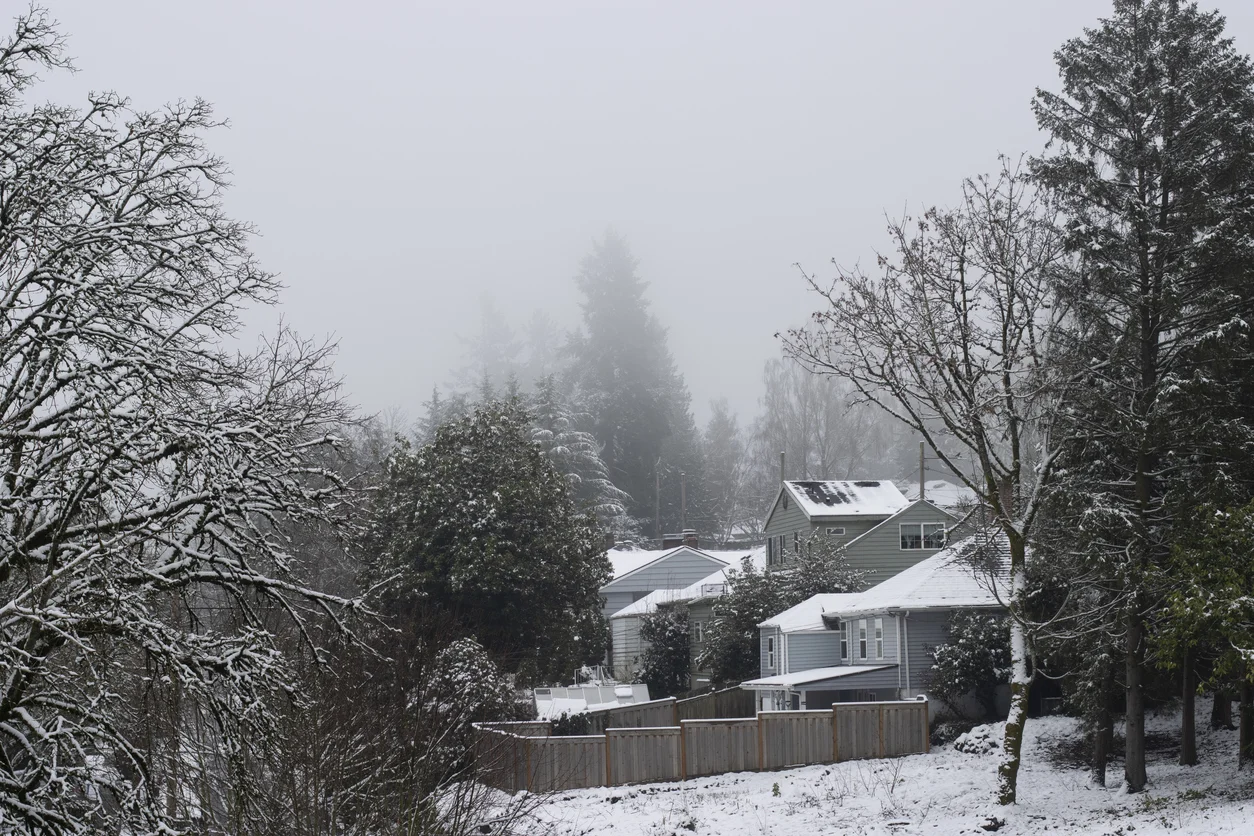
Winter in the Pacific Northwest doesn’t usually bring extreme cold or heavy snow — but it does bring long stretches of rain, cool temperatures, and constant moisture. Your roof sits through months of damp conditions, often staying wet for days at a time. Over time, that exposure can quietly take a toll.
You might notice moss spreading across shingles, gutters overflowing during storms, or a faint ceiling stain that wasn’t there last year. When the roof isn’t actively leaking, those signs can feel easy to ignore. This guide helps explain what winter weather is really doing to your roof in our region, and how to stay ahead of problems before they become costly.
At Elm Construction Services, we work on roofs throughout the Pacific Northwest and see the same winter-related patterns year after year. As a GAF Master Elite and Preferred Installer, we understand how roofing systems should perform in wet, windy conditions and where they tend to fail first.
Why Pacific Northwest Winters Are Hard on Roofs
The biggest challenge is persistent moisture. Frequent rain and limited drying time mean your roof can stay damp for extended periods.
This environment can lead to:
Faster loss of shingle granules
Softening or breakdown of sealants
Moisture seeping into small gaps and seams
Gradual deterioration that’s hard to spot early
Because of this, winter roof damage here is usually slow and subtle. Instead of one major event, problems often build over several seasons before showing up as leaks, soft decking, or rot along the eaves.
How Moss and Constant Moisture Break Down Roofing Materials
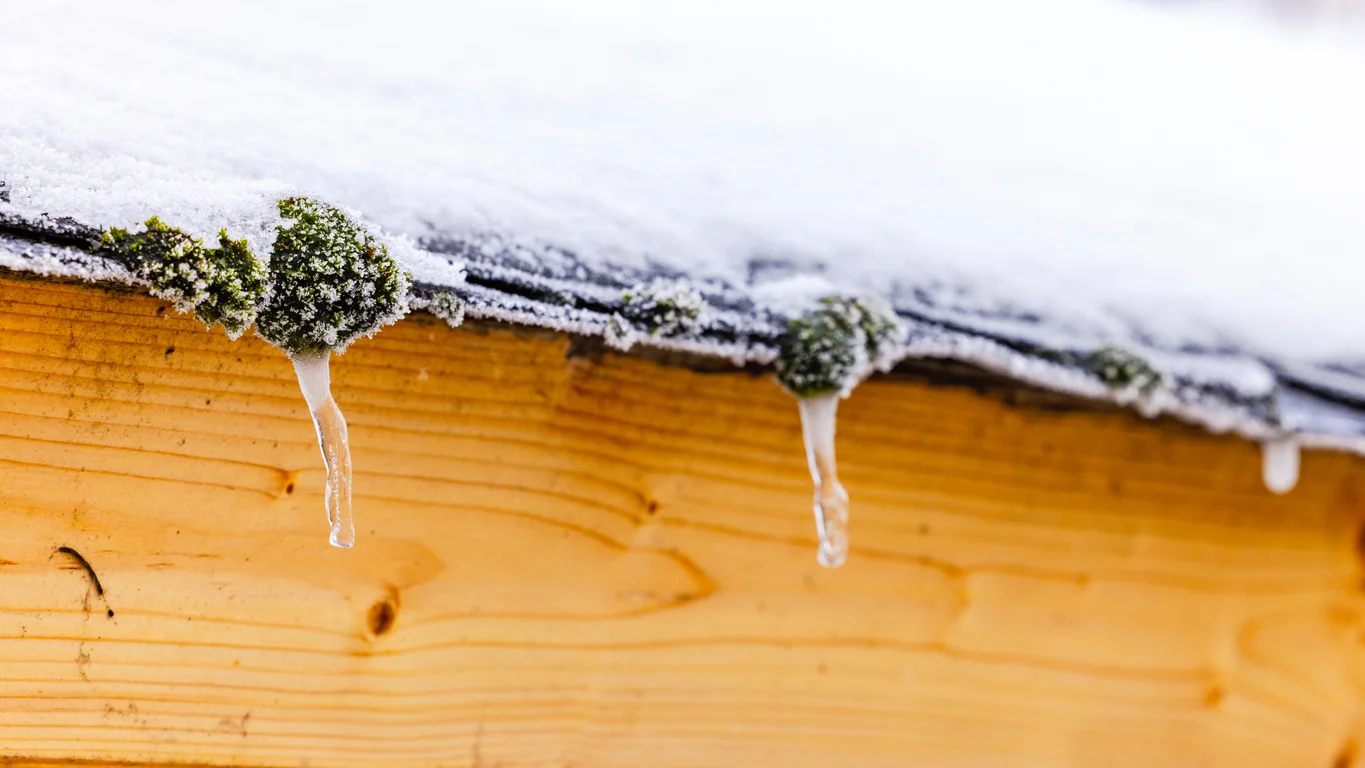
Moss, algae, and lichen thrive in damp, shaded areas, especially on north-facing roof slopes. What starts as a light film can slowly turn into thick growth that traps moisture against shingles.
Over time, this can:
Accelerate granule loss
Keep shingles wet longer than designed
Lift shingle edges and allow wind-driven rain underneath
Moss isn’t just cosmetic. Heavy growth is often a sign that water has been sitting on the roof for too long. While harsh cleaning methods can cause damage, early evaluation and gentle treatment can help preserve the roof’s lifespan.
Wind-Driven Rain and Hidden Winter Leaks
During winter storms, wind pushes rain into places it wouldn’t reach during calm weather, under shingles, around flashing, and near roof penetrations like vents and skylights.
Common trouble spots include:
Chimneys and skylights
Roof-to-wall transitions
Ridge caps and valleys
Early signs of wind-related leaks are often subtle, such as ceiling stains that appear only after heavy storms or musty attic odors. These details are a major focus during winter inspections because they’re often where leaks begin.
Freeze-Thaw Cycles and Gutter Stress
Even mild winters can cause damage when wet conditions are followed by freezing nights. As trapped moisture freezes and expands, it can slowly widen small cracks and loosen materials.
This often affects:
Shingle edges and fasteners
Gutters and roof drainage
Fascia and soffit boards
Ice-related drainage problems can cause water to back up at the roof edge, increasing the risk of leaks and exterior damage.
Attic Ventilation and Winter Moisture Buildup
Roof performance is also about what’s happening in the attic. Warm, moist air from everyday activities can rise and condense on cold roof surfaces.
Without proper ventilation, this can lead to:
Mold or mildew on wood surfaces
Rusted nails
Damp or compacted insulation
Weakened roof decking over time
Balanced attic ventilation helps control moisture and supports longer roof life in our wet climate.
What Homeowners Can Safely Watch For
Without climbing onto the roof, you can still spot warning signs:
Heavy moss buildup, especially in shaded areas
Curling, lifted, or missing shingles
Gutters that sag or overflow during rain
Stains on ceilings or upper walls after storms
Musty odors in the attic
Noticing these early makes it easier to address issues before they escalate.
Why a Winter Roof Inspection Matters
A professional winter roof inspection focuses on early-stage issues caused by moisture, wind, and temperature changes.
At Elm Construction Services, inspections typically include:
Shingle and flashing condition
Valleys, roof edges, and drainage
Gutters and fascia
Attic ventilation and moisture indicators
Because we’re a GAF Master Elite and Preferred Installer, our recommendations align with manufacturer standards and support long-term roof performance.
Protect Your Roof Before Winter Takes Its Toll
Pacific Northwest winters quietly test every part of your roof. The good news is that most serious problems start small, and with timely inspections and maintenance, they can often be addressed before turning into major repairs.
If you’ve noticed moss growth, gutter issues, or new ceiling stains, we can help you understand what’s happening and what steps make sense next.
Call (971) 318-5112 to schedule a winter roof inspection with Elm Construction Services.